
1-3 mm vs <200 um
LMD focus size compared with SLM in Sharma et al.
Our lattice-structure LMD paper contrasts LMD's larger focus size with SLM's smaller focus, which is why the process design logic is different.
Sharma et al., Procedia CIRP 2018About Manish Sharma
I am Manish Sharma. I work on industrial AI and decision systems for engineering processes. My deepest public work is in AI for Laser Metal Deposition and Directed Energy Deposition at Exafuse, where process monitoring, robotics, repair decisions, RFQ quality, and physical inspection all meet.
The question that connects my public work is not simply whether an AI model can produce an answer. It is whether the decision can be traced to the right signals, assumptions, engineering context, and verification evidence.
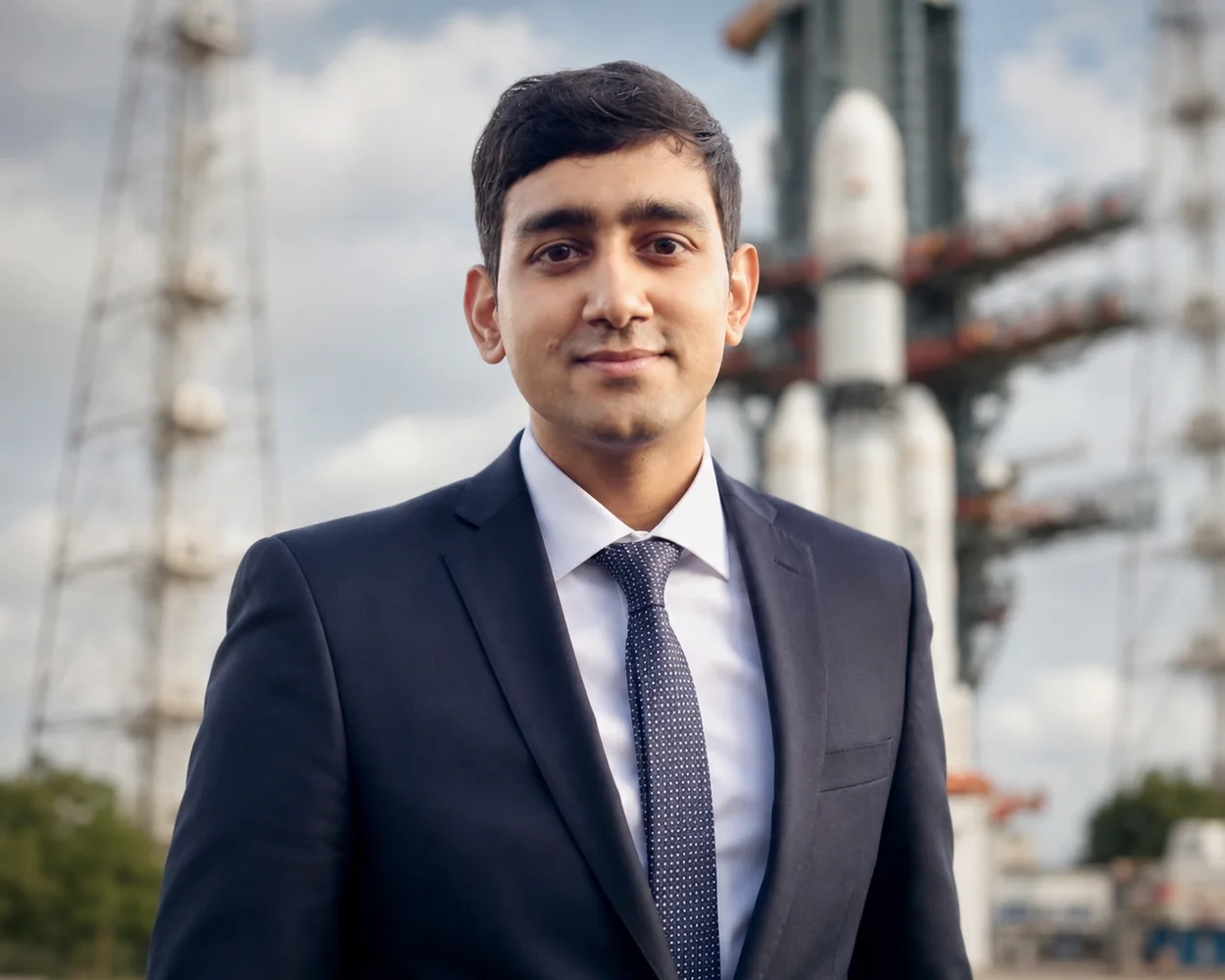
Manish Sharma
AI for Laser Metal Deposition
Since
2018
Laser Metal Deposition work
Public role
AI + R&D
Exafuse, Germany
Research
Public profile material
Ruhr University Bochum
Focus
Industrial AI
Decision systems, monitoring, LMD/DED
Current work
I work in the middle of process development, monitoring, robotics, and AI. The aim is to make industrial decisions clearer without pretending software replaces engineering evidence.
Public profile materials describe a background that combines DED/LMD process development, machine vision, neural-network-based feature extraction, robotic toolpath refinement, and traceable build documentation. The practical thread is process stability, repeatability, and the evidence needed after a decision leaves the model.
This site is where I turn that work into public notes, frameworks, and small tools. It is meant for engineers, students, buyers, developers, and anyone who needs clearer language around LMD, DED, laser cladding, monitoring, repairability, and RFQ preparation.
Public profile details should be verified against LinkedIn, a current CV, or official event material where required. This site avoids confidential employer or customer data; the public technical content is educational and decision-support oriented.
Working numbers
I keep a 500-record LMD/DED reference map for orientation, but the numbers below are only used where a checked source or public profile material supports them.
1-3 mm vs <200 um
Our lattice-structure LMD paper contrasts LMD's larger focus size with SLM's smaller focus, which is why the process design logic is different.
Sharma et al., Procedia CIRP 20181070 nm / 450 W / 2 mm
The published experiment used a ytterbium fiber laser, 316L powder, a 2 mm focus size, and a 3 mm substrate for columnar built-up lattice experiments.
Sharma et al., Procedia CIRP 201845-90 um
I keep details like this visible because they are more useful than a generic portfolio claim.
Sharma et al., Procedia CIRP 20185-10 mm / >95%
From my public profile material: broad-track DED goals include rotating multi-spot optics, 5-10 mm wide tracks, multimodal monitoring, layer-to-layer control, and a >95% powder-utilization target. This is a project target, not a published result claim.
Manish Sharma public profile materialFocus areas
Decision-support systems that keep signals, assumptions, risks, recommendations, and verification evidence traceable.
Vision-based monitoring, melt-pool and bead-geometry indicators, anomaly signals, and data pipelines that make process behavior easier to review.
Robotic DED toolpaths, KUKA workflows, slicer post-processing, ROS2 integration, sensor and camera control, and real-time system interfaces.
Process windows, repair and cladding workflows, traceability packs, inspection-ready documentation, and repeatability.
AI outputs treated as decision support, with physical inspection and engineering evidence kept visible where risk requires it.
Frameworks, schemas, prompts, and public notes that help people separate known facts, missing information, assumptions, and risks.
Exafuse proof context
The site should not just use words like AI, monitoring, repair, and RFQ. It should point to the industrial situations where those ideas actually matter.
CS15
This is the strongest public anchor for my interest in AI-assisted process understanding without replacing inspection evidence.
CS01
This maps directly to the LMD Repairability Index and the Quality Evidence Ladder.
CS10
This is a clean RFQ-intelligence example: damage boundary, lead time, machining route and inspection context decide the recommendation.
CS13
This supports the site's build-and-coat logic: geometry and surface function should be evaluated as one workflow.
Field principles
These are the instincts behind the frameworks: stay practical, keep inspection visible, and be skeptical of overconfident AI claims.
In DED/LMD, stand-off distance and layer-height errors add up quickly. I treat height sensing, toolpath correction, and post-machining allowance as part of the process plan, not a late fix.
Coaxial vision, pyrometry, and melt-pool features are useful because they tell us what the process was doing. They only become strong evidence when they are connected to inspection results.
A weak request is not always a short request. The real problem is missing material grade, damage depth, tolerance, operating conditions, or inspection criteria.
For industrial DED/LMD, parameter logs, change control, build reports, inspection reports, and deviation tracking are part of the work, not paperwork at the end.
Experience
Jan 2024 - Present
Exafuse GmbH, Bochum
Technology owner for monitoring and control concepts for industrial DED/LMD cells, including robotic and large-format systems, sensor/camera stacks, calibration routines, traceability, and inspection-ready reporting.
Jan 2020 - Dec 2023
Exafuse GmbH
Built machine-vision monitoring systems for LMD, developed neural-network models for feature extraction and quality indicators, integrated model outputs into automation interfaces, and supported toolpath refinement.
Dec 2017 - Jun 2021
Ruhr University Bochum, Chair of Applied Laser Technology
Worked on vision systems and machine-learning approaches for Laser Metal Deposition, including lattice-structure deposition experiments and process understanding.
Technical stack
A compact map of the technical vocabulary that shows up repeatedly in my public work.
Education
Ruhr University Bochum, Chair of Applied Laser Technology
Vision-based process control for Laser Metal Deposition with Artificial Intelligence. Mar 2020 - Present.
Ruhr University Bochum
Faculty Prize / Best Student, grade 97%. Apr 2017 - Jan 2020.
Rajasthan Technical University, India
Gold Medal, grade 87%. May 2012 - Jun 2016.
Public work
Human note
I’m interested in how AI can improve technical work without blurring the line between a useful process signal and validated engineering evidence.
The goal is to make complex LMD knowledge easier to structure: for buyers preparing RFQs, engineers reviewing risk, and developers building technical tools. This site stays public, inspection-aware, and careful about confidential or employer-owned information.
Identity path